
Choosing the Right Siding for Your Home
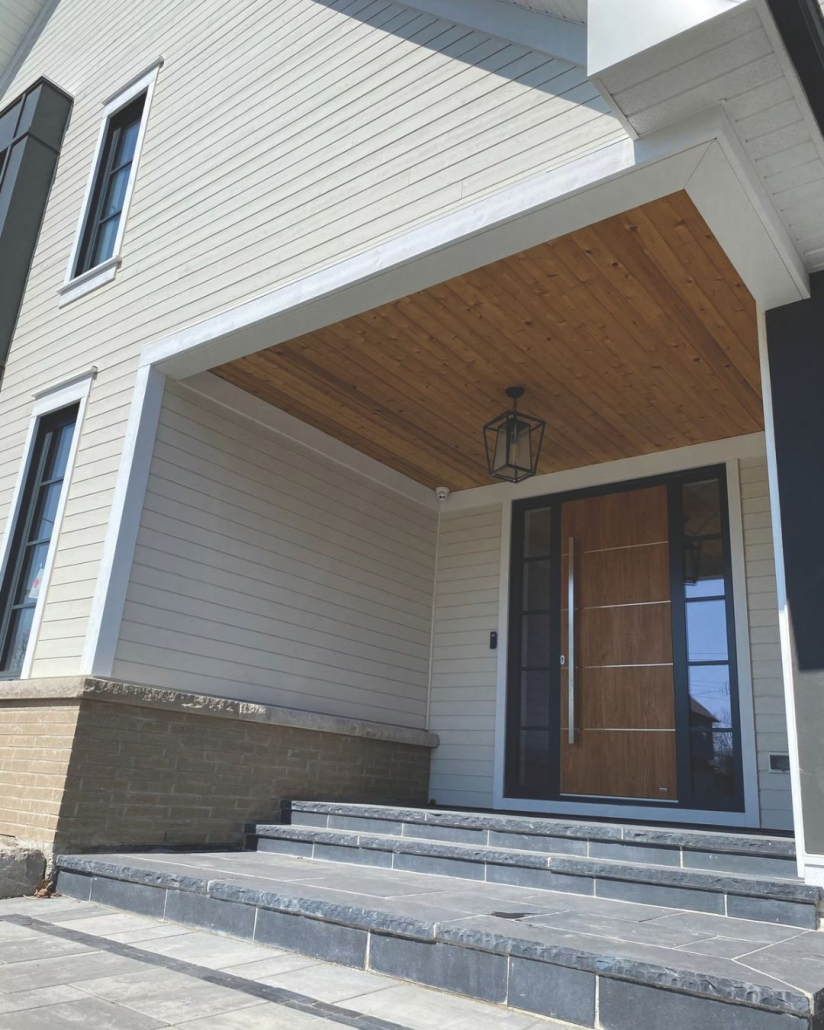
Siding does more than cover your home’s exterior. It plays a major role in how your house looks and how it withstands freeze-thaw cycles, humid summers, rain, wind and extreme weather events. In Southern Ontario, proximity to Lake Ontario means occasional high winds and humidity that can test even strong siding systems. While a material may look great in a picture or showroom, it also has to suit your home, your neighbourhood and how much maintenance you’re willing to take on.
Brick and stone
Brick remains a familiar choice in the region, with most subdivision homes constructed with a brick exterior. While upfront costs are higher, brick is known for its long lifespan, low routine maintenance, fire resistance and strong resale appeal. It also gives a home visual weight and a sense of permanence. However, repairs and additions can be difficult to match, and poor flashing or mortar work can allow for water leakage.
Natural stone is among the most expensive finishes, particularly when weight requires structural support and skilled installation. It offers exceptional durability and a distinctive, upscale appearance. Manufactured stone veneer delivers a similar look at a lower cost and weight, but installation quality is critical. Drainage, clearances and flashing must be handled correctly.
Stucco
Traditional or acrylic stucco can create a clean, continuous exterior that suits contemporary, Mediterranean and transitional homes. Cost is typically mid-to-high range, depending on the wall assembly and detailing. Stucco can perform well when installed to create the seamless look of an addition on an older home, but poor quality increases the risk of cracks and moisture intrusion. Repairs may be visible because texture and colour are hard to match as the building ages.
Wood and engineered wood
Wood siding, such as cedar boards or shingles, adds warmth, depth and natural variation. It often sits in the mid-to-high price range and can complement heritage, lakeside and custom homes. Its drawback is maintenance, which requires staining or painting, caulking and periodic repair to control fading, rot and insect damage. Engineered wood generally costs less, arrives prefinished and offers more dimensional stability while preserving a wood-like appearance.
Vinyl and aluminum
Vinyl is one of the most budget-friendly options. It is light, quick to install, available in many colours and does not require painting. Better products have deeper profiles and more convincing textures, but vinyl may crack in severe cold, distort from heat and look less substantial than masonry or premium cladding.
Aluminum is durable, non-combustible and resistant to rot and insects. It works well for modern profiles and difficult details, although it usually costs more than basic vinyl. Over time, it may dent, scratch and show fading.
Fibre cement
Fibre-cement boards combine the appearance of painted wood with good fire, moisture and pest resistance. It offers dependable protection against humidity, lake winds, and seasonal temperature swings in lake-adjacent areas. Pricing is usually mid-to-high, partly because the product is heavy and labour-intensive to cut and install. It holds paint well and offers crisp architectural lines, but it requires correct clearances, fastening and flashing.
Making the choice
Start with your home’s architecture, existing materials and neighbourhood. Heritage designs may favour brick, stone or wood-like finishes, while lightweight cladding can update older buildings with fewer structural changes. Check local bylaws, permits and heritage requirements before beginning.
Set a whole-project budget that includes removal, repairs, insulation, house wrap, flashing, trim, access, permits and taxes. An affordable siding installed over a sound, well-insulated wall may offer better value than a premium product over unresolved issues.
Compare maintenance, repairability, colour matching and warranty coverage. Ask for local references and inspect projects that are several years old, not just newly completed ones.
The best siding decision is not simply the cheapest material or the one with the longest warranty. It is the system that fits the home’s design, manages water correctly, withstands local conditions and remains affordable to maintain.
Local Siding Businesses and sources
- Ideal Siding Oakville — Oakville; full and partial siding replacement, repairs, and several cladding materials.
- CanMac Siding — Burlington-based; serves Burlington, Oakville, Hamilton and surrounding communities.
- Canadian Siding & Roofing — Burlington-based siding, roofing, soffit, fascia and gutter services.
- Ideal Siding Hamilton — Hamilton-area residential and commercial siding installation, replacement and repairs.
- D’Angelo & Sons — Hamilton and Golden Horseshoe siding installation and repair, including vinyl, cedar, aluminum and fibre cement.
By Julie Achtermeier